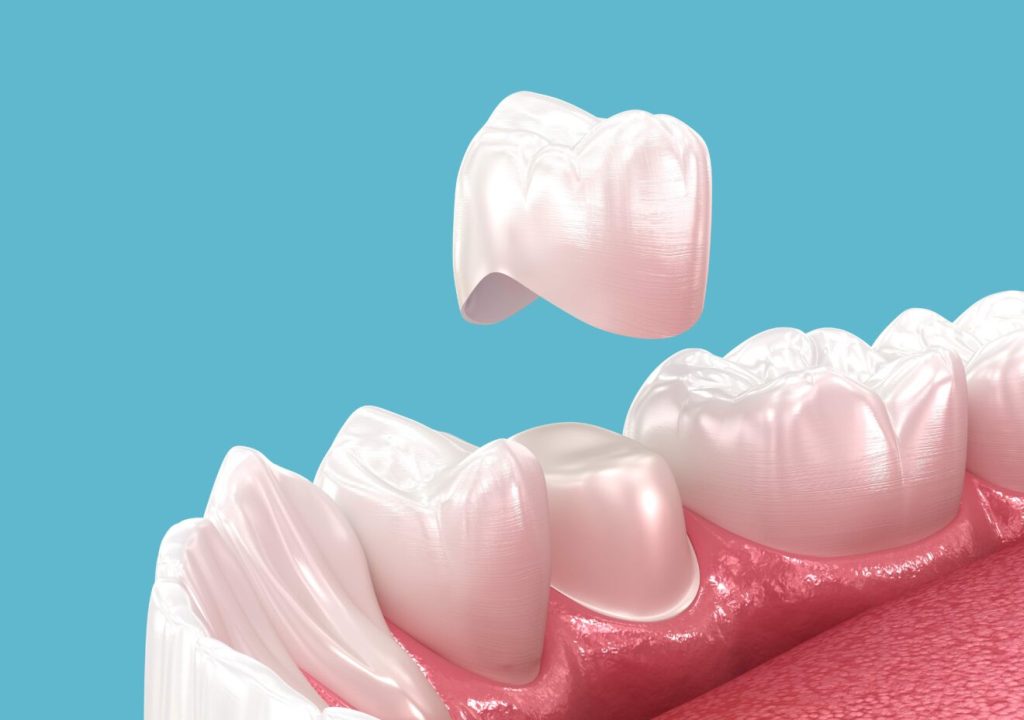
If your crown has come loose, dental crown glue provides a temporary way to secure it until you can visit your dentist. This adhesive helps protect the tooth from sensitivity and damage, but should not be seen as a permanent fix. During professional Dental Crown treatments, dentists use stronger and longer-lasting materials, while temporary glue is only for short-term use. In this article, we explain how it works, when it can help, and why a follow-up with your dentist is essential.
What Is Dental Crown Glue?
When we talk about “dental bonding,” we usually mean two things: a temporary cement, which is used to temporarily hold a crown in place, and a permanent cement, which the dentist uses for a permanent fix.
A temporary glue is designed to provide enough hold for light chewing but is easy to remove, meaning the dentist can remove the crown later without having to damage the crown or the tooth.
How Dental Crown Glue Works
Temporary adhesives are usually based on materials such as zinc oxide (sometimes with eugenol) or weaker resin formulations. The philosophy is simple: a layer of adhesive is created between the inner surface of the crown and the tooth surface, which both fills the tiny spaces and prevents saliva from penetrating. These adhesives are designed to be strong enough for everyday chewing, but can still be removed with instruments or even controlled pressure from the dentist.
Read more: “How to Fix a Broken Dental Crown“
Temporary vs. Permanent Crown Glue
| Feature | Temporary Crown Glue | Permanent Crown Glue |
| Purpose | Short-term use (days to months) | Long-term/final installation |
| Strength | Weaker, allows easy removal | Strong and durable |
| Usage | For temporary crowns or trial periods | Easy to remove by a dentist |
| Removal | Easy to remove by dentist | Difficult to remove, requires professional tools |
| Materials | Simple compounds | Resin, resin-modified glass ionomer (RMGI), other advanced compounds |
The primary distinction between these two types of glue is that Temporary ones are designed for use when short-term service (a few days to a few months, depending on the situation), easy removal, or when the dentist wants to place temporary crowns is required.

Permanent Glues, however, are much more powerful, hence they are used for the final installation and remain there for decades until affected by wear, decay, or the need to be removed. Such materials as resin, resin-modified glass ionomer (RMGI), and other compounds are used for making permanent ones, and the decision of the correct one depends on the kind of crown and the state of the tooth.
When to Use Dental Crown Glue
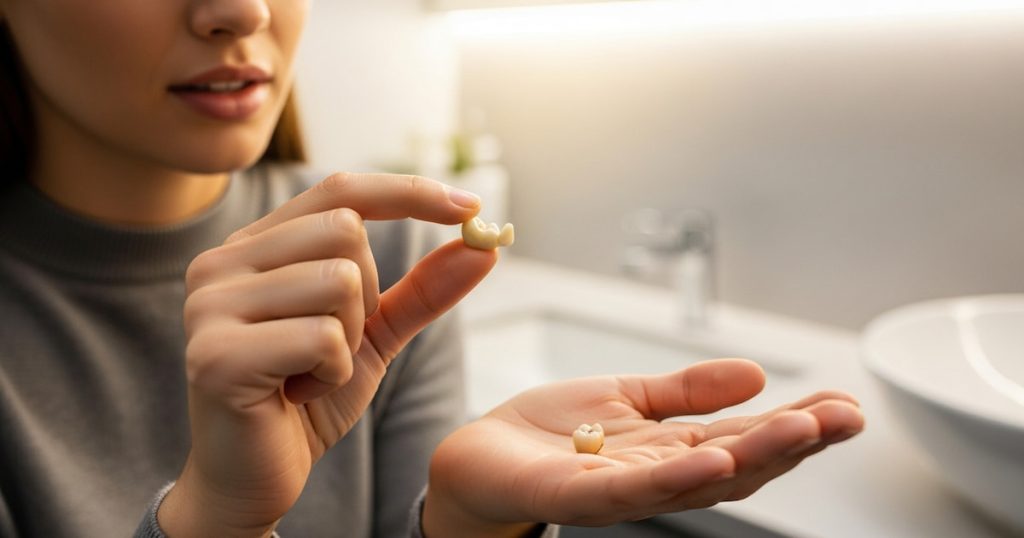
I’m telling you straight: Using a temporary glue is best when you need a temporary solution, not when you’re looking for a permanent solution. So, if your crown has completely come loose and you want to protect it from sensitivity or breakage until you can see a dentist, you can try this adhesive.
Dentists only use this type of glue when they want to temporarily hold the crown in place for examination or treatment, until the permanent crown is installed after final adjustments.
If you want to achieve a Beautiful, Confident Smile, you definitely should check out this: Smile Makeover with Dental Crowns.
Risks and Limitations of Dental Crown Glue
Nothing is perfect; even temporary glue has its limitations and risks. Remember these things:
It’s only temporary
Temporary glue is a short-term solution; don’t expect it to last forever. It can last anywhere from a few days to a few months, depending on the product and your chewing habits (toothbrushes, sticky foods).
Bacteria can get trapped under the crown
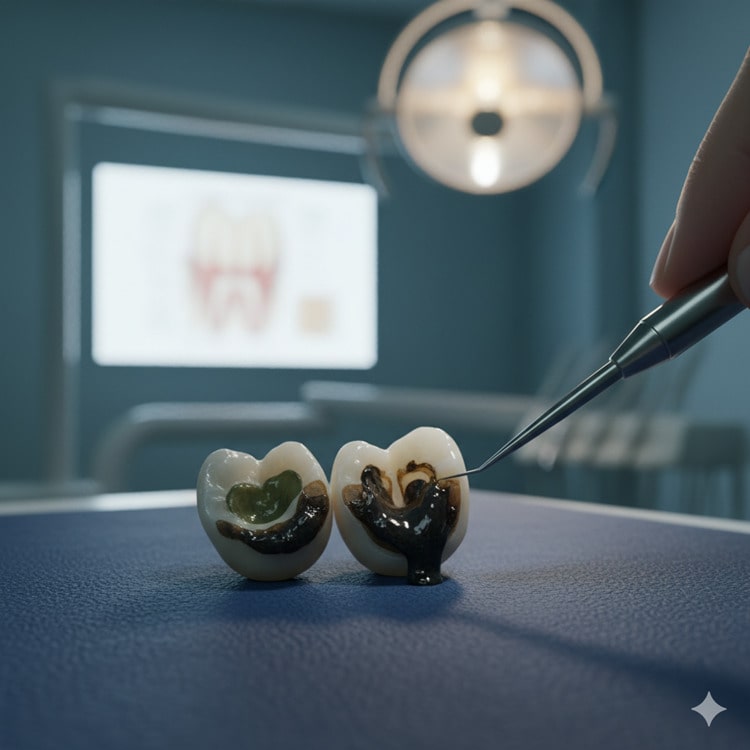
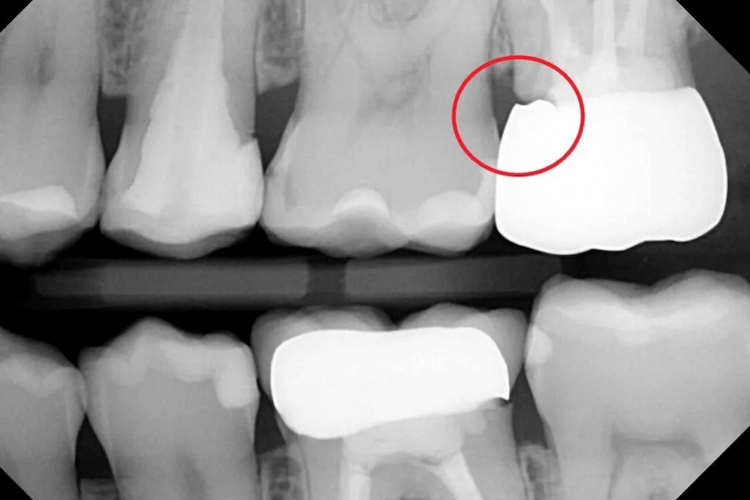
If the crown doesn’t fit properly or the glue doesn’t seal, bacteria can get in and cause decay or root canal inflammation. So, you need to have a professional checkup after the temporary fix.
Using the wrong materials is dangerous
Never use industrial glues or superglue inside your mouth (they’re toxic and harmful). Instead, use temporary dental glue or denture adhesive to hold the crown in place for a short time only.
Eugenol Interactions with Permanent Adhesives
Some temporary adhesives contain eugenol, which can interfere with the setting of permanent resin adhesives; if resin adhesives are to be used later, the dentist should use an “eugenol-free” temporary.
Need Help with a Loose Crown?
Don’t wait until the problem gets worse. At Woodbridge Smile Centre, we provide complete dental care to restore your smile and comfort. Whether it’s an urgent issue or a regular checkup, we’re here for you.
Alternatives and Professional Treatment Options
If your crown is loose or falling out, you have a few options, but first, we recommend that you call your dentist for advice. If you are still a little uncomfortable and not in pain, sometimes your dentist will suggest that you do nothing until your appointment. Otherwise, you can use a temporary adhesive from a pharmacy and apply a small amount of it exactly as directed and press it against your tooth.

In an emergency, denture adhesive or sugarless gum will help temporarily, but they are not a substitute for professional adhesive. It is best to see your dentist as soon as possible so they can identify the cause of looseness (decay, fracture, etc.), perform any necessary cleaning, filling, or post/core work, and then place the crown permanently with a luting cement.
Most crowns can be repaired, but if you’re worried yours can’t and want to know the cost of a new one, check out our post “How Much Do Dental Crowns Cost?”
Practical Step-by-Step: How to Temporarily Fix a Loose Crown
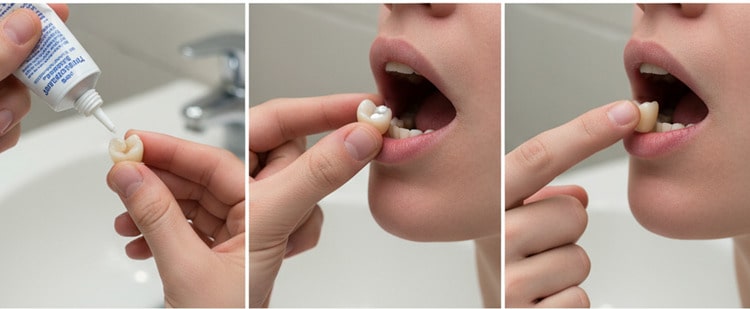
If your crown has fallen out or is completely loose and you decide to use a temporary adhesive until your appointment, follow these steps:
- Stay calm. It’s better to be in control than to rush.
- Find and clean the crown. Scrub the inside of the crown with a soft toothbrush or water, carefully removing any adhesive or food particles.
- Clean the tooth as well. Rinse your mouth with water and make sure the area is dry and clean, but not too wet. A little dampness is usually enough.
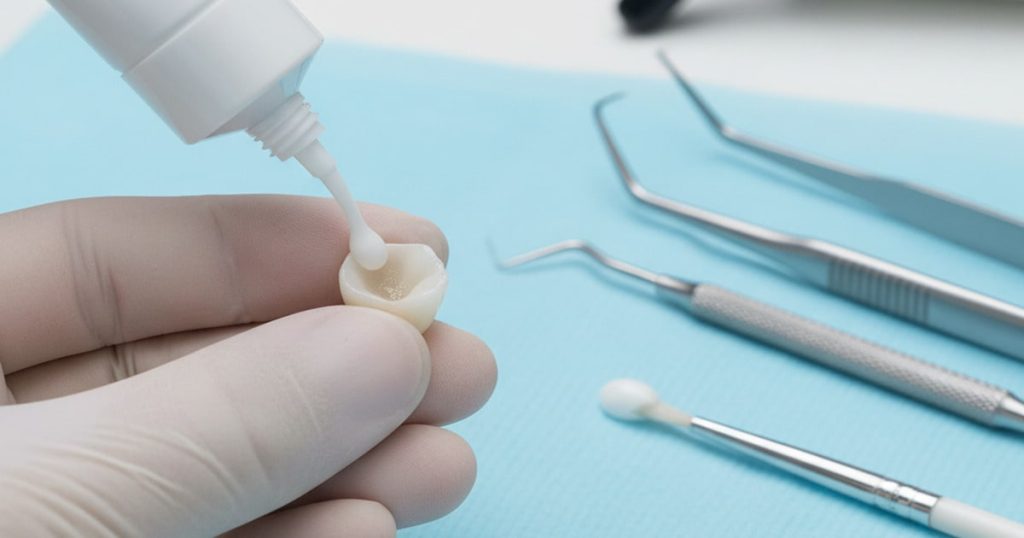
- Apply a very small amount of adhesive to the crown. Most manufacturers emphasize that a small amount is best; filling it completely will cause protrusion and discomfort.
- Carefully place the crown and press firmly. Bite gently a few times to hold the crown in place.
- Wipe off any excess adhesive and wait: some products take anywhere from a few minutes to 1–3 hours to fully set.
- Finally, avoid eating sticky foods or chewing on the area until it is firmly set.
Important note: If you feel like the veneer is not fitting properly or the edges are uncomfortable, stop and see your dentist immediately. Forcing or improper placement can make things worse.
Take the Next Step for a Stronger Smile
Using dental crown glue can be a helpful short-term solution when a crown becomes loose, protecting the tooth and reducing discomfort until you see a dentist. Keep in mind, this option is temporary and cannot replace the durability of professional treatments. For lasting results, CEREC crowns and bridges in just one visit provide a fast and reliable choice. Always consult your dentist quickly to restore your crown and safeguard your oral health.
FAQ
How long does temporary glue last on a crown?
Usually, it takes a few days to a few months, depending on the product, the location of the crown, and your chewing habits. So don’t assume it’s permanent; schedule a visit to the dentist.
Can a loose crown be glued back on?
Yes, a crown can be temporarily glued back on with temporary glue or a pharmacy restoration kit. But for a permanent fix and to check the cause of the looseness (decay, fracture, preparation problem), you should see a dentist. Never use homemade glue or superglue.
How do you temporarily fix a loose crown?
Clean the crown and tooth, put a very small amount of temporary glue inside the crown, put the crown in place and press firmly, wipe off the excess, and wait at least an hour to several hours for the glue to set; then eat carefully and see your dentist as soon as possible.
How strong is the glue they use for crowns?
The strength of adhesives varies: Temporary adhesives are designed to be strong enough for everyday temporary use but can also be removed. Permanent adhesives (resins, RMGI, etc.) are much stronger and can last for years (usually 5 to 15 years or more, depending on the type, hygiene, and chewing conditions).
Have a loose or broken crown? Book an appointment at Woodbridge Smile Centre today and get trusted care for Woodbridge and Vaughan patients.