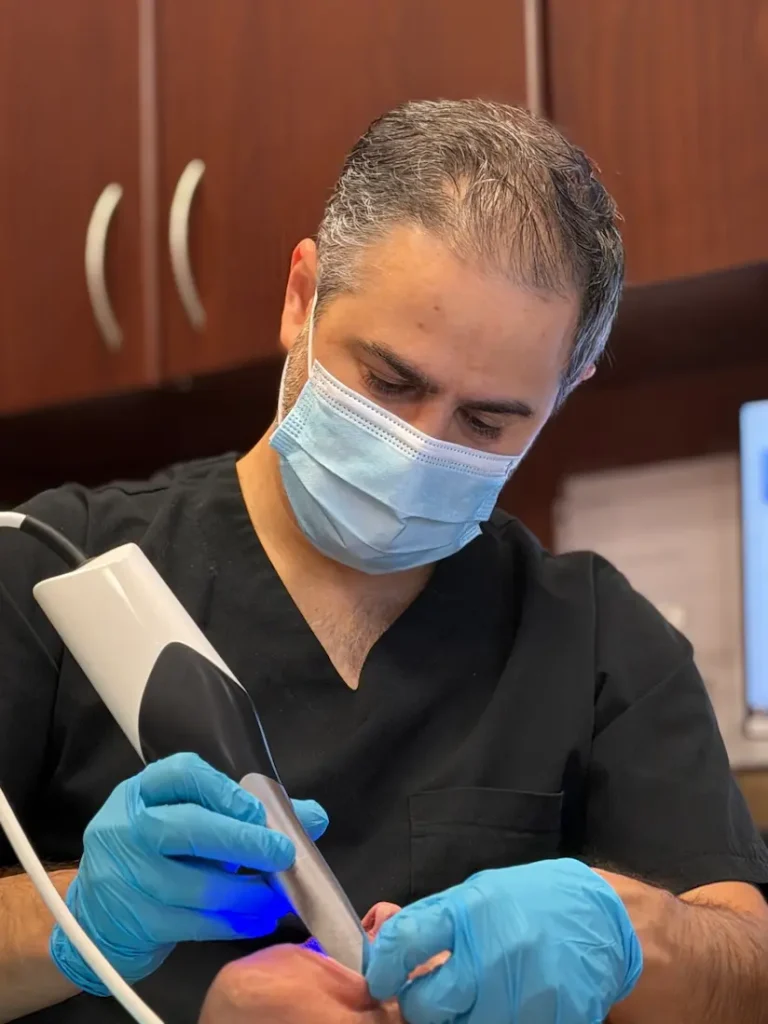
Most people assume a dental implant means months of appointments before there is a tooth in the gap. Same-day dental implants shorten that: the implant is placed and a temporary tooth is fitted during one appointment. Whether it is right for you depends on bone density, gum health, and the stability achieved at placement.
At a glance:
| What it is | An implant placed and loaded with a temporary crown in one visit. |
| What it isn’t | A finished tooth. The final crown is placed after healing. |
| Who qualifies | People with healthy gums, sufficient bone, and good implant stability at placement. |
| First step | A clinical examination and a 3D CBCT scan. |
Follow this guide to learn how same-day dental implants work, who may qualify, what the procedure involves, and what to expect during healing and recovery.
What Are Same-Day Dental Implants?
A same-day dental implant allows us to place an implant and attach a temporary tooth during one appointment, often immediately after we remove a tooth. With conventional treatment, we usually let the implant heal under the gum for three to six months before attaching a tooth.
Three things are worth understanding because “same-day” can be misleading:
- You leave with a temporary tooth, not the final one. We fit the definitive crown after the implant bonds with the surrounding bone, usually three to six months later.
- The surgery takes one visit, but the treatment takes longer. You return for a separate appointment to receive the final crown after healing.
- Not everyone qualifies. If the implant does not have enough stability at placement, we let it heal before attaching a tooth.
Read more: A Complete Guide to the Different Types of Dental Implants

The Same-Day Implant Procedure, Step by Step
The appointment follows four stages: remove the damaged tooth, place the implant, attach the abutment, fit the temporary crown. The planning that precedes them decides whether all four can happen on the same day.
1. Consultation and Planning
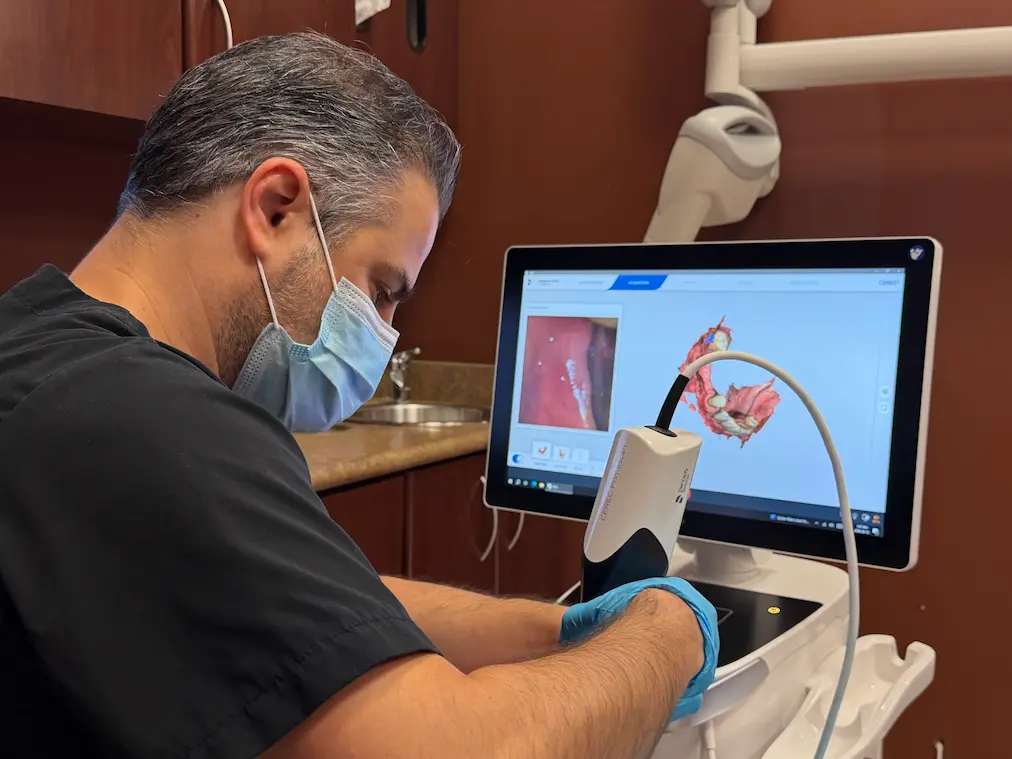
This appointment helps us determine whether same-day implant treatment is suitable for you. We review your medical history and medications, examine your teeth and gums, and take cone-beam CT (CBCT) images. This three-dimensional scan shows us the available bone, its density, and the location of nearby roots and nerves.
CBCT imaging helps us plan the implant’s position before surgery. It also helps us assess whether same-day placement is appropriate or whether another approach would be safer.

2. Implant Placement and Anaesthesia
We numb the area with local anaesthetic to minimise pain during the procedure. You may feel pressure while we work, and the numbness gradually wears off over the following hours. If you feel anxious about dental treatment or need more extensive work, we also offer sedation options, including oral sedation and IV sedation.
Next, we place the implant and measure its primary stability, which tells us how firmly the surrounding bone holds it in place. This measurement helps us decide whether we can attach a temporary crown immediately or need to let the implant heal first.

3. The Abutment and Temporary Crown
We attach a small connector called the abutment to the implant, then secure the temporary crown to it. The implant anchors the tooth in your jawbone, while the abutment connects it to the crown.
We shape the temporary crown to match your teeth. It restores appearance and some function, but cannot withstand full chewing forces, so following the aftercare instructions is important.

4. Healing and the Final Crown
The implant bonds with your jawbone through a process called osseointegration, which usually takes three to six months. During this time, you wear the temporary crown while the implant heals.
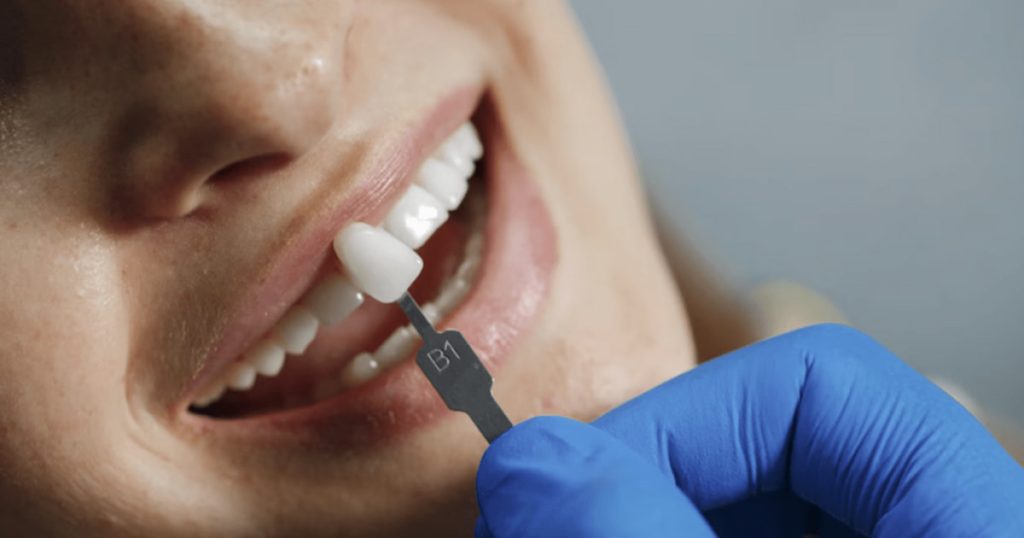
Once we confirm healing, we replace the temporary crown with a permanent crown designed to match your natural teeth in shade, shape, and bite.
Further reading: Dental Implant Process: A Step-by-Step Guide to Restore Your Smile

Who Is a Good Candidate for Same-Day Dental Implants?
Same-day dental implants are not suitable for everyone. During your consultation, we assess whether your gums, bone, and overall health support immediate placement and loading. Good candidates generally meet these criteria:
- Healthy gums: No active periodontal disease.
- Sufficient bone: Enough bone volume and density to provide primary stability.
- Smoking status: Non-smokers generally have a lower risk of implant failure. We may recommend stopping smoking during healing.
- Managed health conditions: Systemic conditions such as diabetes should be well controlled.
We may need to treat active gum disease or address significant bone loss before placing the implant.
If you lack sufficient bone, we may perform a bone graft during surgery or as a separate procedure. This can extend the overall treatment timeline.
Related topic: What Are the Options for Replacing Missing Teeth? (Advantages and Disadvantages)

How Long Do Same-Day Dental Implants Last?
According to RCDSO, same-day dental implants can last 15 years or longer, much like conventional implants, although individual results vary. Conventional implants had survival rates of 96.7% at five years, 92.5% at 10 years, and 86% at 15 years.
Immediate loading can achieve comparable outcomes to conventional loading in carefully selected cases, with adequate implant stability. Long-term results depend on bone quality, smoking, diabetes control, and oral hygiene. These figures describe research outcomes, not a guarantee of how long an individual implant will last.
Read more: Learn How to Boost Dental Implant Success with PRP
Find Out If Same-Day Implants Are Right for You
At Woodbridge Smile Centre, we assess your bone and gum health with a CBCT scan to determine whether a same-day dental implant is right for you. We’ll explain your options clearly and provide a written, itemised quote so you know what to expect before treatment begins.
Book Your Consultation
Aftercare After Same-Day Implant Surgery
After same-day implant surgery, proper aftercare helps protect the implant while it heals. Follow your dentist’s instructions on eating and cleaning the area, as your recovery needs may vary.
| Period | What to do |
|---|---|
| First 24 hours | Avoid rinsing, spitting, and using straws. Don’t brush the surgical site. Apply ice to the cheek for 20 minutes at a time. |
| Days 1–7 | Eat soft foods and chew away from the implant. Take over-the-counter painkillers as directed for pain management after dental implants. Avoid smoking and alcohol. |
| Week 2 onward | Use gentle, alcohol-free rinses. Resume normal hygiene around the site when your dentist confirms it is safe. |
Swelling typically peaks within 48–72 hours. Mild, localised discomfort should gradually improve during the first week.
Contact your dentist if pain worsens after day three, swelling increases, you develop a fever, bleeding persists, or the temporary crown or implant becomes loose.
Learn more: How to Take Care of Dental Implants: Essential Tips for Long-Lasting Results

Same-Day vs Traditional Dental Implants
The main advantage of same-day dental implants is that you can receive a temporary tooth during implant placement. Timing also matters because the jawbone begins to change after a tooth is extracted. A systematic review by Kalsi et al. reported an average reduction of about 3.8 mm in ridge width within six months after extraction.
| Feature | Same-day implants | Traditional implants |
|---|---|---|
| Surgical visits | Usually one for implant placement and a temporary tooth | One, sometimes two, for implant placement |
| Tooth in place | Temporary tooth fitted the same day | Tooth fitted after healing |
| Case requirements | Stricter eligibility criteria | Suitable for a broader range of cases |
| Early failure risk | May be higher in some cases | Generally lower with delayed loading |
| Long-term outcomes | Comparable in carefully selected cases | Well documented |
If we cannot achieve sufficient primary stability, we may recommend conventional treatment and allow the implant to heal before attaching a tooth.
Read more: What to Know About Common Problems After Dental Implant Surgery
Cost and Coverage in Ontario
Dental implant costs depend on the components you need, including the implant, abutment, crown, imaging, and any bone grafting. After your assessment, we provide a written treatment plan with itemised fees so you know the expected costs before treatment begins.
Private insurance may cover part of the treatment, depending on your plan and annual maximums, and we offer direct billing with most major insurers. The Canadian Dental Care Plan (CDCP) does not cover dental implants or implant-supported restorations.
To help manage costs, we accept major credit cards and offer flexible payment plans and CareCredit. Contact us to discuss the available payment options and find out which may help you handle the finance.
Also check: What You Need to Know About Dental Implants Cost in Woodbridge, Vaughan

Same-Day Dental Implants at Woodbridge Smile Centre
We provide dental implant care at Woodbridge Smile Centre in Vaughan, serving patients from Woodbridge, Maple, Vellore, and Kleinburg. Our practice offers in-house dental care and diagnostic services, including CBCT imaging, so you can receive your assessment and treatment planning in one location. We also provide full-arch restorations such as All-on-4 dental implants.
Our dentists, Dr. Aryan Rezaeifar, who has over 10 years of experience in general and cosmetic dentistry, and Dr. Rita Calotti, who has 10 years of experience in family and restorative dentistry, provide care at the clinic. During your consultation, we assess whether your bone and gums can support immediate implant loading. If same-day treatment is not suitable, we explain the alternatives and expected timeline before proceeding.
You can contact us at (905) 832-3310 to arrange a consultation. We provide on-site CBCT imaging, bill most major insurance providers directly, and have a multilingual team that speaks English, Farsi, Korean, and Italian.
FAQ
Is same-day dental implants painful?
The appointment is done under local anaesthetic, so you feel pressure rather than pain. Mild soreness afterwards usually settles within a week.
Can I eat normally that day?
No. You leave with a functional temporary crown, but chew soft foods and avoid the treated side until healing is confirmed.
Am I too old for same-day implants?
There is no upper age limit. Bone condition and general health matter more than age, and implants are routinely placed in older adults.
Is a same-day implant better than a bridge?
A bridge uses neighbouring teeth for support; an implant is independent and preserves bone. The choice depends on those teeth and your bone volume.
What happens if the implant fails?
The implant is removed, the site heals, and grafting is usually done before a second attempt. Your dentist will explain your personal risk at assessment.
Have you considered same-day dental implants, or do you have questions about the procedure? Share your thoughts or questions in the comments below.