Seeing a sharp edge or a small piece missing after a cleaning can be worrying, especially if your first thought is “Dentist chipped my tooth during cleaning!” But this feeling is fairly common, and what feels like a chipped tooth may actually be tartar that was removed or a pre-existing weak spot that became noticeable.
Before you assume the dental cleaning caused the damage or not, read on. Woodbridge Smile Centre in Toronto will help you understand what may have happened, how to tell the difference between tartar and a real chip, and what to do next.
How to Tell If Your Tooth Is Actually Chipped
In many cases, what feels like a chip is actually something else. You usually can figure out for yourself what actually happened to your tooth.
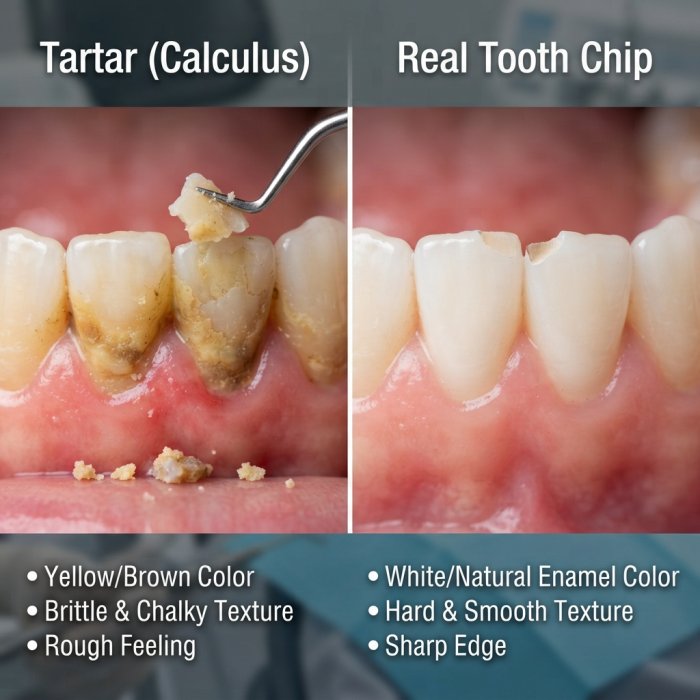
Tartar vs Real Tooth Chip
Heavy tartar (also called calculus) can build up over time, especially if it’s been a while since your last cleaning. This hardened material sticks tightly to the tooth. When the hygienist removes it, pieces can break away and leave a rough or sharp feeling. Many people mistake that for a chipped tooth.
Here’s how you can tell them apart:
| Feature | Tartar (Calculus) | Real Tooth Chip |
| Color | Usually yellow, brown, or dark | White or the same color as the rest of your enamel |
| Texture | Brittle and chalky; crumbles if you press it gently | Hard and smooth; does not crumble easily |
| Feeling in mouth | Rough or gritty, rarely causes sensitivity to cold/air | Sharp edge that can catch the tongue or cheek; may feel sensitive |
| Location & size | Can come off in larger pieces, often near the gumline or lower front teeth | Usually smaller and changes the shape of the tooth |
If the piece you noticed was dark, crumbly, and didn’t cause any sensitivity, it was most likely tartar that had been hiding on the tooth surface. Once it’s gone, the tooth can feel different simply because the thick layer is no longer there.
Note: If you can’t in any way tell whether it’s tartar or a real chip and you’re feeling stressed about it, an examination by an emergency dentist can give you a quick, clear answer.
You might need: How to Find an Emergency Dentist Near You Fast
What to Do If Your Tooth Really Chipped
If you’ve checked and it looks like a real piece of enamel is missing, don’t panic. Most chips that happen around a cleaning are small and straightforward to fix.
Immediate Steps Right After Noticing the Chip
Follows these steps, which protect the tooth and keep the area comfortable until your tooth can be examined:
- Rinse your mouth carefully with warm water to clear away any loose pieces or debris.
- If the edge feels sharp and is irritating your tongue or cheek, cover it with dental wax (available at most pharmacies) or a small piece of sugar-free gum.
- Avoid chewing on that side of your mouth. Stick to soft foods for now.
- Over-the-counter pain relief like ibuprofen can help if there’s any mild discomfort.
- Call the dental office the same day or the next business day and describe what you’re feeling.
You may need: What to Do With a Broken Tooth: A Quick Guide

Common Repair Options
For the majority of small chips that appear after cleaning, the fix is simple:
- Smoothing: If only a tiny edge is rough, the dentist can gently polish it smooth in a few minutes.
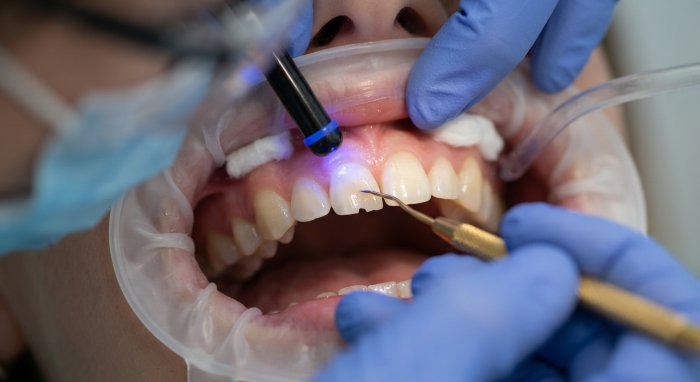
- Dental bonding: A tooth-colored composite resin is applied, shaped, and hardened with a light. This is the most common repair and usually takes one short visit.
Larger chips are less common after a routine cleaning, but if needed, options like a veneer or crown may be discussed.
Related topic: What You Should Do if Your Dental Crown Falls Off
Does the Clinic Cover the Cost?
Many clinics will repair a chip that occurred during their cleaning at no extra cost or at a reduced fee, especially when the tooth was already compromised by heavy tartar or an old filling. Policies vary, so ask when you call. The important thing is getting the tooth evaluated quickly so a small issue doesn’t turn into something bigger.
Think Your Dentist Chipped Your Tooth?
If you noticed a sharp edge or a small piece missing after a cleaning, and you are worried abouy what happened, Woodbridge Smile Centre in Vaughan can examine your tooth.
For peace of mind, you can also trust us with your future dental cleanings.
Get your tooth examined or book your next dental cleaning.
Why This Sometimes Happens During Cleaning
In most cases, the hygienist does not break healthy enamel. What usually happens is that heavy tartar has been covering small pre-existing weaknesses (tiny cracks, areas of softened enamel, or old fillings that were already unstable).
When the tartar is carefully removed, those weak spots can suddenly become noticeable. Sometimes a small piece of compromised tooth structure or an old restoration loosens at the same time. This is more likely when someone hasn’t had a cleaning in a long time or already has enamel that has been weakened by grinding, acid erosion, or previous dental work.
Research Box:
A 2018 laboratory study found that ultrasonic scaling caused deeper enamel damage in teeth with pre-existing enamel cracks or early decay than in sound enamel. Damage averaged 37.6 μm in cracked enamel versus 17 μm in sound enamel. This finding suggests that existing tooth defects can make teeth more vulnerable during cleaning.
Learn more: What is Scaling in Dentistry? A Guide to Dental Cleaning
How to Prevent This From Happening Next Time
Besides knowing that this feeling is fairly common after a cleaning, which can help reduce unnecessary worry and stress, a few simple steps can make future cleanings more comfortable and reduce the chances of this happening or causing unnecessary concern and complications:
- Keep your regular cleaning schedule. Heavy tartar buildup is one of the main reasons weak spots stay hidden.
- Tell the hygienist before they start if you have any sensitive teeth, old fillings, or previous chips.
- Mention any grinding or clenching habits so they can be extra careful in those areas. You may also benefit from a night guard to protect your teeth from further wear.
- Ask them to go slowly around any teeth that feel different or have large restorations.
Read more: Early Cavity Detection: Protecting Teeth Before Damage Spreads
Get Your Tooth Checked or Cleaned at Woodbridge Smile Centre
If you’ve noticed a sharp edge or possible chip after a cleaning, or if you simply want a thorough, careful professional cleaning with peace of mind, our team at Woodbridge Smile Centre is here for you.
Under the care of Dr. Aryan Rezaeifar, a licensed Ontario dentist and member of the Royal College of Dental Surgeons of Ontario (RCDSO), we take these situations seriously. Whether you need a quick evaluation after a recent cleaning or a complete professional hygiene appointment, our experienced hygienists and dental team work carefully to protect your teeth while delivering a proper result.
You can contact us today at (647) 559-2251 or (905) 832-3310, or visit us at 3582 Major MacKenzie Dr W, Vaughan, ON L4H 3T6.
FAQ
Is it normal to feel rough spots after a cleaning even if nothing chipped?
Yes. Removing heavy tartar can change how the tooth surface feels temporarily. The sensation usually settles once your mouth adjusts.
Should I still get regular cleanings if I’ve had a chipped tooth before?
Yes. Regular cleanings help prevent heavy tartar buildup and allow dental problems to be identified before they worsen.
Can a small chip get worse if I leave it untreated?
It can. A damaged edge may wear further or become sensitive, so your dentist should assess even a small chip.
Can a tooth chip without causing pain?
Yes. Small chips may cause little or no pain, but an examination can determine whether there is deeper damage.
Why does my tooth feel sharp after a dental cleaning?
It may be exposed tooth structure, a small chip, or simply the area where heavy tartar was removed. A dental exam can tell the difference.
Have you ever noticed a sharp edge or chipped tooth after a dental cleaning? Share your experience in the comments, or leave a question if you’re still concerned about it.